Galaxy Office Automation

Hyper-Converged Infrastructure

Hyper-converged Infrastructure

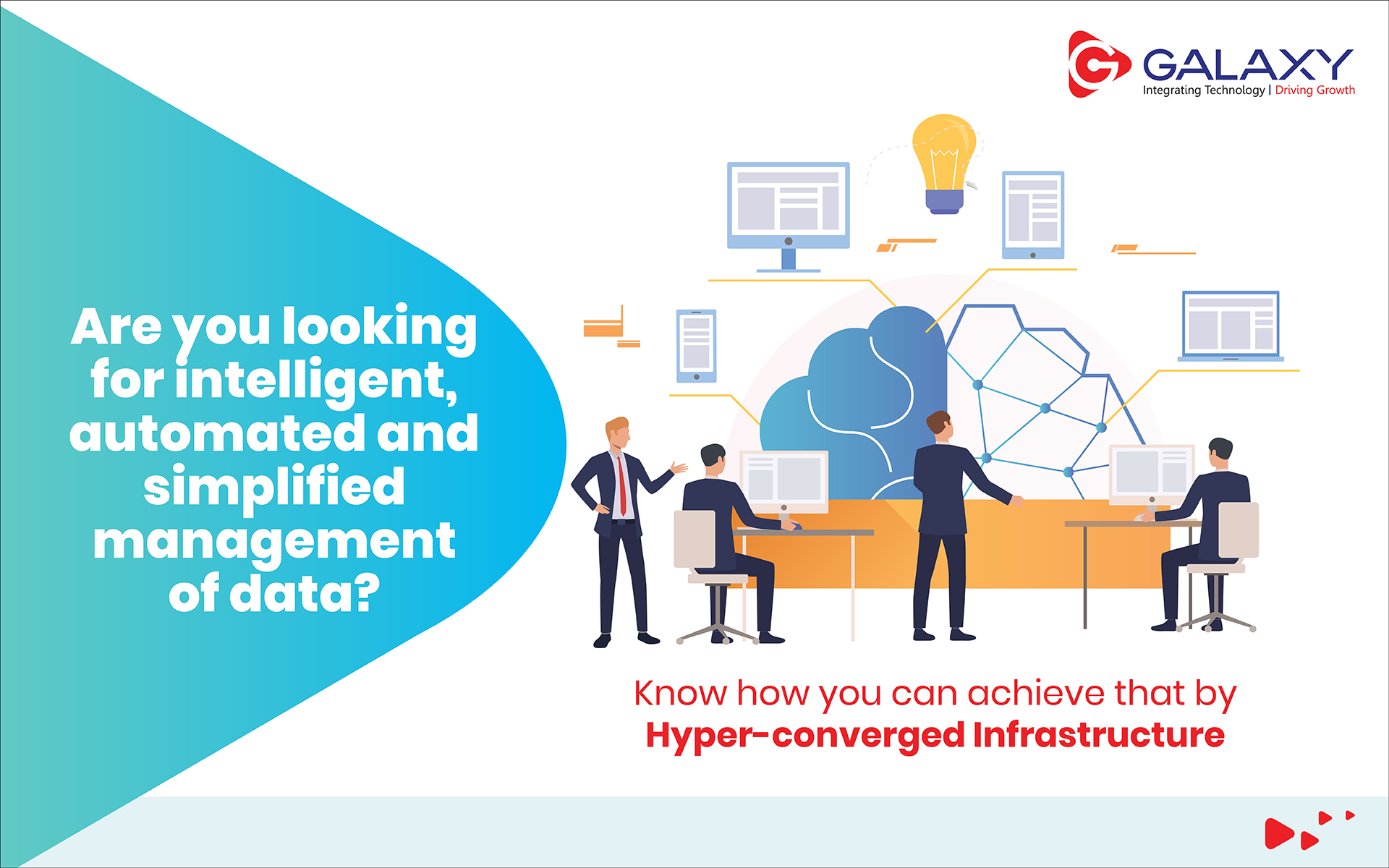
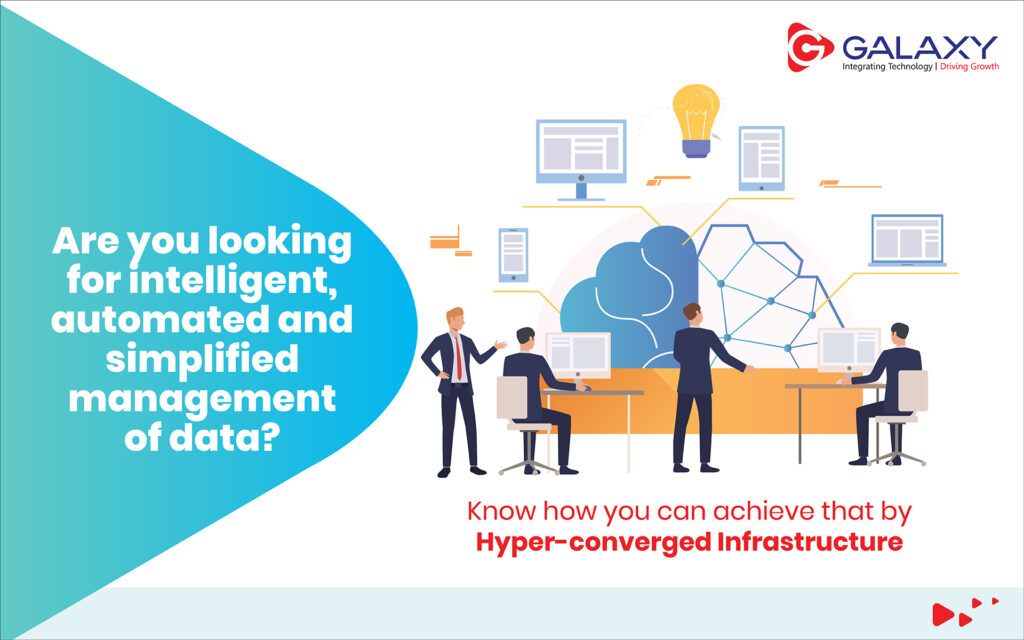
Are you looking for intelligent, automated and simplified management of data?

Know how you can achieve that by Hyper-converged Infrastructure.

What does Hyper-converged Infrastructure mean?

Hyper-converged infrastructure is a prototype shift that tightly integrates storage, computes, networking and virtualization resources in a single system. Thus, reducing infrastructure complexity and enhancing scalability without compromising on performance. Hyper-converged infrastructure can also be termed as Hyper-convergence.

There are many benefits of this tightly integrated node infrastructure, but the primary reasons for organizations switching from complex infrastructure to the simplicity of hyper-convergence are lower costs, consistent performance, and flexibility. Things that Hyper-convergence can do:

Cost-Efficient 

Data scaling is the biggest challenge that organizations are facing today. Hyper-convergence is modeled to avoid frequent purchases of infrastructure every few years. Low costs hardware is used to scale the data center that can be easily managed. Expanding HCI is as simple as just adding the IT resource. Integrating components reduces storage use, power use and lowers management costs. HCI data center costs become less as there is lesser equipment to purchase and manage. Companies can start small and grow resources as needed.

Staff Efficient

As everything gets folded into a hyper-converged environment, recruitment needs of the organization change. Instead of having specialist staff for each resource area, infrastructure specialist can be recruited.

Data-Efficient

Because all the components are working together, the management of tools can be achieved from one console. There’s constant pressure on the IT department and data centers to deliver predictable results. When multiple applications share the same infrastructure, it’s possible that the performance of one application can hinder the performance of others. HCI’s performance settings eliminate resource contention and variable application performance. It also improves data efficiency by deduplicating data which leads to an increase in storage capacity and network bandwidth.

Data Protection

In a traditional data center, data protection is both complex and expensive. It is required to purchase expensive hardware to protect data. However Hyper-converged environment comes with built-in functionalities like data backup, recovery, and disaster recovery. After all hyper-convergence is all about simplifying infrastructure.

Performance Efficient

Hyper-convergence allows organizations to deploy workloads and many kinds of applications to enjoy high performance. HCI uses fast CPUs and SSDs storage devices. The environment handles all CPU and memory capacity so that instead of focusing on individual resource needs administrators can focus on applications.

Multi-cloud Support Efficient

Hyper-convergence simplifies a hybrid cloud environment and lessens transitioning time and cost. Data & Applications can be moved easily between servers and the public cloud.

Data grows by 40% every year, in 2019 it has reached 28,000 exabytes.

With data growing at that speed, organizations need additional challenges to keep up with the infrastructure updates. With the Hybrid cloud being used endlessly,3-tier infrastructure cannot fulfill all the IT needs. Hyper-converged infrastructure is designed to deliver simplicity, higher automation, and scalability than converged infrastructure. Investments in the Hyper-converged environment has increased in recent years. Hyper-convergence is a good choice for those organizations that uses virtualization largely and having difficulty to cope up with the cost that is required for data storage and protection. With the technology in the right place, organizations will no longer need to rely on different computer or storage systems. They can rather invest their time and human resources on operational aspects than on maintaining infrastructure. 

Hyper-converged infrastructure is a bundled software model with potentials like data compression, data protection, data optimization, data deduplication, backup, and recovery. It is an integrated hardware and software package implemented and sold by a single vendor. Thus it requires less installation and configuration.

As per Gartner, 20% of organizations that are currently using 3-tier infrastructure will transit to hyper-converged infrastructure by 2020.

Hyper-converged infrastructure is the future. It centralized all the hardware needs in a single console. It is flexible and uses a pay-as-you-grow model when organizations need to expand.

Given the above-mentioned benefits of hyper-convergence, are you ready for this evolution? Have you already moved to the hyper-converged data centers, share your thoughts on this IT infrastructure solution!

FOR A FREE CONSULTATION, PLEASE CONTACT US.
Hyper Automation

Hyper Automation

Technology today has changed the elementary facet of our lives. With urge for a stronger and better internet connectivity, digitization of processes has led the world to move towards automation. That wasn’t enough and thus the new buzz word Hyper Automation.

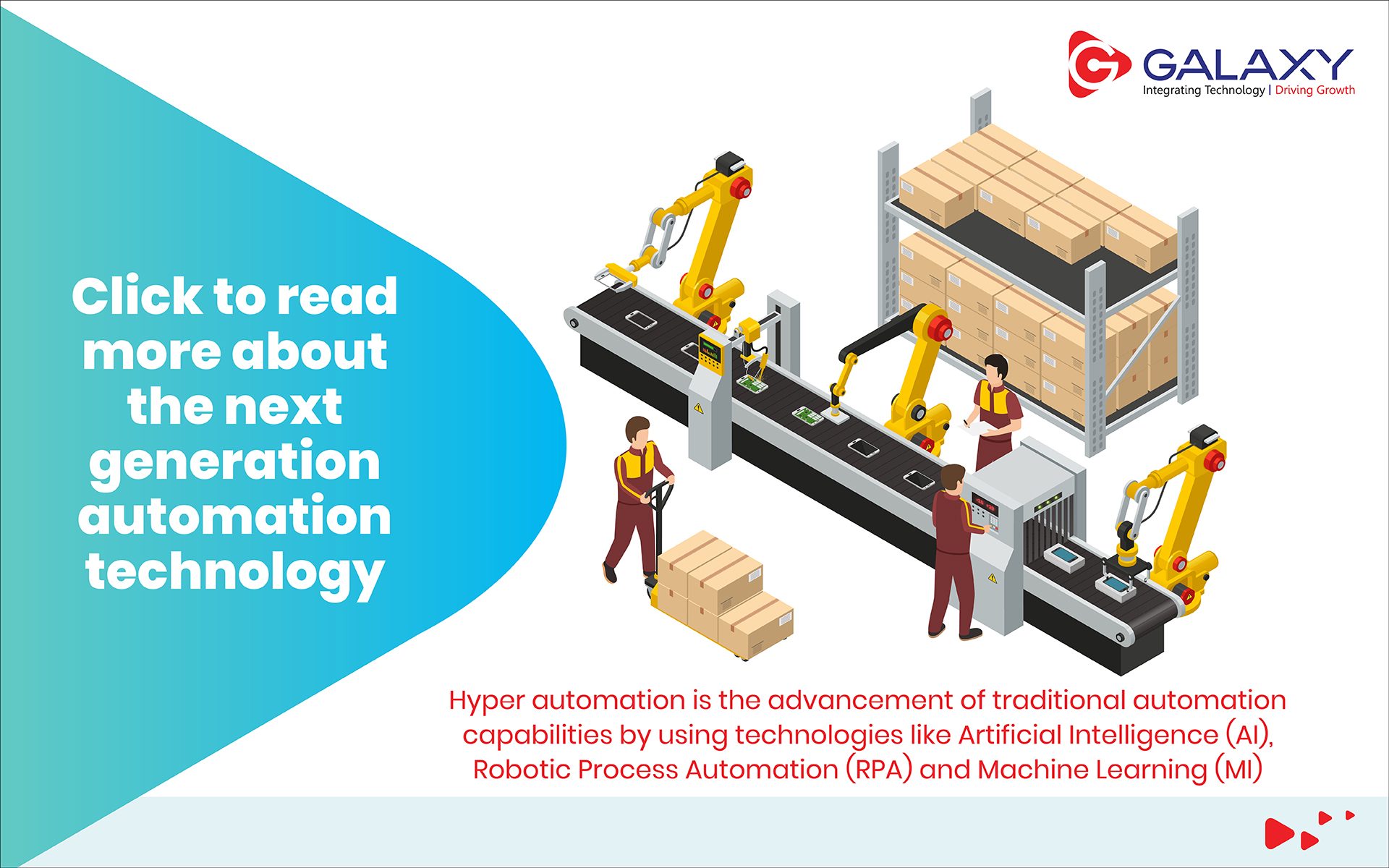
Hyper automation is the advancement of traditional automation capabilities by using technologies like Artificial Intelligence (AI), Robotic Process Automation (RPA) and Machine Learning (MI) to automate processes. Basically, hyper automation is a combination of automation tools to increase AI decision making. Hyper automation is the future of RPA of replacing human actions required for digital tasks. Gartner says that multiple tools are needed to replace the work that a human can do, and thus hyper automation combines all the automation efforts under a single umbrella.

Hyper automation is a prodigious tool to uplift the business. Businesses can benefit immensely from hyper automation in following ways:

  • Decrease human effort by doing lot of work in less time
  • Reduces risk of human errors
  • Increases productivity and output

Execution and implementation of automation is tough and complicated. It creates new challenges for the businesses with how the IT environment is controlled. Automation is present in every step taken in companies such as device connectivity, collecting data, extract valuable data from business for analytics and present it to stakeholders for business profits. Automation is an underlying layer and thus judgment calls to identify the scope of automation are required before implementation. Thus, Gartner defines hyper automation important when constructing IoT devices.

Hyper automation will continue to expand, and companies need to focus on automating complex processes resulting in end-to-end solution. Amazon and FedEx are the top companies that has used hyper automation to intensify customers experience and execute piece of work related to logistics.

The implementation of automation results in a digital twin of an organization (DTO). Digital twin is a concept about creating digital representation of connected IoT devices managed by a single tool. Hence instead of giving access to different IoT devices, digital twin can be presented to stakeholders. Digital twin helps in predictive analysis of organizations assets leading to efficient functioning of business. With this concept businesses can eliminate problems before they occur to prevent failures. DTO are designed to work consistently and continuously. The data collected in this process is analyzed continuously and saved in cloud. This results in accessing data instantly for various business analysis. It also enables users to resolve issues from any remote location.

We’ve previously discussed how RPA will be effective for the productivity of the business. Soon automation will be important for every company. But without being aware of where automation is required in business and following the trend, implementing it would be a disaster. Hyper automation is both a blessing and a curse. So, it becomes important to firstly identify areas for automation. Employees in company should also be trained to make most out of automation and not think it as a danger to their job.

Companies are competing to future proof their business by implementing intelligent, robotic and automation systems. For hyper-automation in every facet of business it requires continuous and optimal blending of human and machine capabilities.

In a short span of time expansion of hyper-automation has inspired companies to eradicate manual operations quickly to use human force in other more important areas of business. If you’re still not in the game, then you’re definitely missing out on opportunities of expanding your business.

So, is your business ready for hyper automation? If not, what other automation technologies are you currently engaging? What benefits have your business reaped?

Please write to us at marketing@goapl.com

FOR A FREE CONSULTATION, PLEASE CONTACT US.