Galaxy Office Automation

Galaxy Delivers Cognitive Zero-Trust Fabric for a Borderless Enterprise

In today’s distributed digital landscape, security is no longer just about protecting a perimeter, it’s about securing identities, data and interactions across an ever-expanding ecosystem. As organizations navigate multi-cloud environments, remote work models and AI-driven operations, the need for a smarter, more adaptive security framework has become critical. This is where Galaxy steps in as a trusted solutions provider, helping enterprises build and operationalize a Cognitive Zero-Trust Fabric.

From Concept to Capability

While many organizations understand the importance of Zero Trust, translating it into a scalable, real-world implementation can be complex. Galaxy bridges this gap by transforming the Zero Trust philosophy into a practical, outcome-driven security architecture enhanced with cognitive intelligence.

By integrating identity, network, endpoint, application and data security into a unified fabric, Galaxy enables organizations to move away from siloed defenses toward a cohesive, intelligent security ecosystem.

Building the Fabric: Galaxy’s Approach

Galaxy adopts a structured and consultative approach to help customers design and deploy a Cognitive Zero-Trust Fabric:

  • Assessment & Strategy

Galaxy begins by evaluating the customer’s existing IT environment, identifying gaps in visibility, access control and threat detection. Based on this, a tailored Zero Trust roadmap is created aligned with business goals and compliance requirements.

  • Identity-Centric Security Implementation

Recognizing identity as the new perimeter, Galaxy implements robust identity and access management frameworks. This ensures continuous verification of users and devices, leveraging contextual factors such as location, device health and behavior.

  • Unified Security Fabric Integration

Galaxy integrates diverse security components across cloud, on-premise and hybrid environments into a connected framework. This enables seamless information sharing and coordinated threat response across the ecosystem.

  • Cognitive Intelligence Enablement

By embedding AI and machine learning capabilities, Galaxy enhances the fabric with real-time analytics and behavioral insights. This allows organizations to detect anomalies, predict risks  and respond proactively rather than reactively.

  • Automation & Orchestration

To reduce response time and operational overhead, Galaxy deploys automated workflows for threat detection and remediation. Security incidents are addressed instantly, minimizing impact and ensuring business continuity.

Driving Real-World Outcomes

Through its Cognitive Zero-Trust Fabric approach, Galaxy helps customers achieve tangible business and security outcomes:

  • Stronger Security Posture

Continuous monitoring and adaptive access controls significantly reduce the risk of breaches and insider threats.

  • Improved User Experience

Intelligent authentication mechanisms ensure that security does not come at the cost of productivity, applying stricter controls only when risk is detected.

  • Operational Efficiency

Automation and centralized visibility streamline security operations, allowing IT teams to focus on innovation rather than firefighting.

  • Scalable and Future-Ready Architecture

Galaxy’s fabric-based approach is designed to evolve with the organization, supporting new technologies, users and workloads without compromising security.

Enabling Continuous Trust

What sets Galaxy apart is its focus on continuous improvement. A Cognitive Zero-Trust Fabric is not a one-time deployment, it is a living framework that evolves with emerging threats and business changes. Galaxy ensures this through ongoing monitoring, optimization and advisory services.

By continuously refining policies, updating models and enhancing integrations, Galaxy enables organizations to stay ahead of the threat landscape while maintaining agility.

Conclusion

As enterprises move beyond traditional security models, the need for an intelligent, adaptive approach becomes undeniable. Galaxy empowers organizations to embrace this shift by building a Cognitive Zero-Trust Fabric that is not only secure but also scalable and future-ready.

With the right blend of strategy, technology and expertise, Galaxy transforms security from a reactive necessity into a proactive business enabler helping customers innovate with confidence in an increasingly complex digital world.

How to Control Cloud Costs Using a FinOps Framework

How to Control Cloud Costs Using a FinOps Framework

Many organizations begin their cloud journey expecting agility and scalability — but as environments grow, managing cloud costs becomes increasingly complex.

Without the right governance and financial accountability, cloud spending often grows faster than business value.

This is where a FinOps Maturity Model becomes essential.

Rather than treating cost optimization as a one-time exercise, a FinOps maturity approach helps organizations evolve their cloud financial management practices in a structured and sustainable way.

# Understanding the FinOps Maturity Journey

Most organizations progress through three key stages as they mature their cloud financial operations.

1. Crawl – Cost Visibility

At this stage, organizations focus on understanding where cloud spending is occurring.

Typical priorities include:

• Establishing visibility across cloud accounts and subscriptions
• Implementing tagging and cost allocation models
• Creating centralized cost dashboards and reporting
• Tracking budgets and identifying anomalies

The goal at this stage is to build transparency and awareness across teams.

2. Walk – Cost Optimization

Once visibility is established, the focus shifts to optimizing resource consumption.

Key initiatives include:

• Rightsizing compute and database workloads
• Eliminating idle or orphaned resources
• Optimizing storage tiers and lifecycle policies
• Leveraging Reserved Instances, Savings Plans, or committed usage models

At this stage, organizations begin to see measurable improvements in resource efficiency and cost predictability.

3. Run – Continuous FinOps Governance

In the most mature stage, FinOps becomes embedded into day-to-day cloud operations.

Organizations implement:

• Policy-driven governance and automation
• Auto-scaling and scheduled resource management
• Budget alerts and anomaly detection
• Cross-team collaboration between engineering, finance, and business teams

Cost optimization becomes a continuous operational discipline rather than a reactive activity.

# How Galaxy Supports FinOps Maturity

At Galaxy, we help organizations progress through each stage of the FinOps maturity journey by combining cloud engineering expertise with financial governance frameworks aligned with AWS and Azure best practices.

Our approach focuses on:

  1. Cloud Financial Visibility
    Building cost transparency through tagging strategies, dashboards, and consumption analytics.
  2. Workload Optimization
    Analysing infrastructure usage patterns to improve efficiency across compute, storage, and network services.
  3. Governance & Automation
    Implementing guardrails, automation policies, and cost controls to ensure sustainable cloud operations.
  4. Multi-Cloud Financial Management
    Supporting organizations operating across AWS, Azure, and hybrid environments with unified cost governance.
  5. Continuous FinOps Advisory
    Providing ongoing monitoring, optimization recommendations, and operational guidance as cloud environments evolve.

# Why FinOps Maturity Matters

Organizations that adopt a structured FinOps maturity approach gain:

• Greater control and predictability over cloud spending
• Improved utilization of infrastructure resources
• Faster and more informed cloud architecture decisions
• Stronger alignment between technology investments and business outcomes

Cloud success today is not only about scalability and performance — it is also about financial efficiency and operational accountability. With the right FinOps practices in place, organizations can ensure their cloud environments remain both innovative and economically sustainable.

Building an AI-Ready IT Infrastructure: What Most Organizations Miss

Building an AI-Ready IT Infrastructure: What Most Organizations Miss


Artificial Intelligence is transforming how businesses operate from automation and predictive analytics to intelligent customer engagement. Yet, many organizations invest in AI tools without preparing the underlying IT foundation required to support them.

The result? Pilot projects that never scale, performance bottlenecks, security concerns and unclear ROI.

An AI-ready IT infrastructure is not just about deploying AI models it’s about building a scalable, secure, high-performance ecosystem that allows AI to continuously learn, evolve and deliver business value.

Let’s explore what organizations often miss and how Galaxy helps bridge that gap.

What Most Organizations Overlook

✔ AI Needs Infrastructure, Not Just Algorithms

Many enterprises focus on AI applications but ignore:

  • High-performance compute environments
  • GPU-enabled processing
  • Low-latency networking
  • Scalable storage architecture

Without these, even the best AI models struggle to perform efficiently.

✔ Data is the Real Foundation

AI systems depend on clean, unified and accessible data. However:

  • Data is siloed across departments
  • Legacy systems lack integration
  • Real-time data processing is missing

An AI-ready enterprise must prioritize intelligent data architecture before scaling AI initiatives.

✔ Scalability from Day One

AI workloads grow rapidly. What starts as a pilot can quickly demand enterprise-scale processing.

Organizations often miss:

  • Cloud-hybrid flexibility
  • Elastic infrastructure
  • Automated resource provisioning

Scalability must be designed upfront not retrofitted later.

✔ Operationalization of AI (MLOps)

Deploying AI is only half the journey. Continuous improvement requires:

  • Model monitoring
  • Version control
  • Performance tracking
  • Automated retraining

Without operational frameworks, AI initiatives lose momentum.

✔ Security, Governance & Compliance

AI introduces new risk layers:

  • Sensitive data exposure
  • Model vulnerabilities
  • Regulatory non-compliance

Security must be embedded at every infrastructure layer not added as an afterthought.

How Galaxy Helps Organizations Build AI-Ready Infrastructure

At Galaxy, we understand that technology alone doesn’t create value the right architecture and strategy do. We partner with organizations at every stage of their AI adoption journey.

Here’s how Galaxy helps you succeed:

✔ End-to-End Infrastructure Assessment

Galaxy conducts a detailed audit of your current IT environment to:

  • Identify bottlenecks
  • Map data flows
  • Understand workload patterns
  • Define future-ready infrastructure requirements

This ensures AI investments are grounded in real business needs not guesswork.

✔ Intelligent Data Platform Design

Galaxy helps you build:

  • Centralized data lakes or warehouses
  • Harmonized data formats and pipelines
  • Real-time data streams
  • Governance frameworks for secure and compliant data access

With a strong data foundation, your AI models gain speed, accuracy and reliability.

✔ 3. Hybrid and Cloud Infrastructure Solutions

Galaxy architects flexible, scalable infrastructure that includes:

  • Cloud platforms optimized for AI
  • Hybrid models for sensitive or regulated data
  • Support for GPU clusters and high-performance computing
  • Seamless infrastructure scaling with workloads

This future-proofs your AI environment while controlling costs.

✔ 4. DevOps & MLOps Enablement

Galaxy integrates DevOps and MLOps practices to ensure:

  • Smooth deployment pipelines
  • Versioning and reproducibility
  • Continuous monitoring and automation
  • Faster time-to-insight for AI models

Teams can innovate faster without disrupting production systems.

✔ 5. Security & Compliance Built-In

Galaxy embeds security at every layer:

  • Data encryption and access controls
  • Compliance with local and global regulations
  • AI risk management frameworks
  • Threat detection and response systems

You get the power of AI with governance and peace of mind.

Don’t Just Adopt AI, Build the Infrastructure to Win With It

AI is reshaping industries, but success doesn’t come from point solutions or flashy technology alone. True AI value comes from robust, scalable, secure IT infrastructure that supports real-world business needs.

If your organization is ready to move beyond experimentation and build an AI foundation that accelerates innovation, Galaxy is here to help from strategy and design to deployment and optimization.

How to Build a 90-Day DPDP Compliance Technology Roadmap

How to Build a 90-Day DPDP Compliance Technology Roadmap

India’s Digital Personal Data Protection (DPDP) Act has shifted privacy from a legal discussion to a technology execution mandate. Organizations are now expected to demonstrate visibility, control, and accountability over personal data – across hybrid infrastructure, legacy platforms, SaaS ecosystems, and partner networks.

The challenge?
Most enterprises don’t fail at intent – they fail at operationalizing compliance inside IT systems.

This 90-day roadmap provides a structured, execution-focused approach to help organizations transition from policy readiness to technical enforcement.

Why a 90-Day Approach Works

DPDP compliance is not a one-time project. It’s a transformation.
A 90-day roadmap helps organizations:

  • Achieve rapid visibility into personal data risks
  • Prioritize high-impact remediation instead of boiling the ocean
  • Establish defensible safeguards aligned with regulatory expectations from Ministry of Electronics & Information Technology
  • Build a scalable privacy-by-design foundation

The 90-Day DPDP Compliance Technology Roadmap

Phase 1 (Days 0-30): Data Visibility & Risk Baseline

Objective: Establish a comprehensive “Ground Truth” for personal data by uncovering its location, movement, and security status.

  • Automated Data Discovery: Deploy scans across the entire ecosystem including cloud storage, legacy databases, and employee endpoints to catalogue both structured and unstructured data.
  • Centralized Data Registry: Construct a master inventory that classifies data types and validates the legal justification for their retention.
  • Data Lineage Mapping: Visualize how data traverses internal systems and where it exits to third-party partners or international jurisdictions.
  • Vulnerability Assessment: Pinpoint “hot zones” such as unencrypted repositories, forgotten (Shadow IT) databases, and redundant data.

Phase 2 (Days 31-60): Control Implementation & Process Alignment


Objective: Transition from visibility to active enforcement by embedding DPDP-compliant controls into the tech stack.

  • Consent Lifecycle Management: Deploy a robust architecture to capture, timestamp, and store granular consent. Ensure “Withdrawal Synchronization” so that if a user opts out, the preference propagates to all downstream systems.
  • Automated Rights Fulfilment: Streamline Data Principal Rights (SRRs) by building automated workflows for data access, correction, and the “Right to Erasure,” supported by secure identity verification.
  • Privacy-by-Design Implementation: Enforce data minimization by stripping non-essential fields from UI/UX and backend schemas, ensuring collection is strictly tethered to a defined business purpose.
  • Advanced Data Protection: Institutionalize “Security-by-Default” through end-to-end encryption, strict Role-Based Access Control (RBAC), and continuous audit logging of all PII access.

Phase 3 (Days 61-90): Automation, Monitoring & Governance Readiness

Objective: Institutionalize data protection through automation, ensuring the organization remains “compliant by default.”

  • Proactive Security Telemetry: Deploy User and Entity Behaviour Analytics (UEBA) to detect anomalous access to personal data. Maintain immutable, forensic-grade logs for real-time threat detection and post-incident analysis.
  • Resilient Incident Response: Formalize a “Privacy-First” breach framework. This includes automated impact assessments and predefined workflows to meet strict regulatory notification timelines.
  • DevSecPrivacy Integration: Embed data protection into the Software Development Life Cycle (SDLC). Implement automated data masking in staging environments and “Privacy Gates” within CI/CD pipelines.
  • Executive Oversight Dashboards: Launch centralized reporting to track Key Performance Indicators (KPIs), such as Right-to-Erasure fulfilment speeds and overall data risk scores.

How Galaxy Helps Accelerate DPDP Compliance in 90 Days

Galaxy enables organizations to translate DPDP obligations into deployable technology controls through a structured, outcome-driven approach.

1. Rapid Discovery & Classification Instantly locate and categorize personal data across on-prem, multi-cloud, SaaS, and legacy systems to create a unified “Source of Truth.”

2. Consent & Lifecycle Engineering Systemically embed consent capture, validation, and withdrawal directly into your digital architecture to eliminate manual compliance gaps.

3. Automated Data Flow Mapping Visualize how data traverses applications, vendors, and borders to identify and close hidden exposure points.

4. Data-Centric Security Safeguards Harden protection using Zero Trust principles, end-to-end encryption, and real-time monitoring of all sensitive data interactions.

5. Automated Rights Fulfilment Deploy seamless workflows for Data Principal requests (Access, Correction, Erasure) without disrupting core business operations.

6. Privacy-by-Design (DevOps) Integrate privacy engineering and data masking into CI/CD pipelines, ensuring every new release is compliant by default.

7. Audit-Ready Governance Equip leadership with real-time dashboards tracking risk posture, consent metrics, and regulatory accountability.

With the right technology roadmap and execution partner, DPDP compliance can move from uncertainty to structured transformation—in just 90 days.

How to Establish AI Governance Without Slowing Innovation

How to Establish AI Governance Without Slowing Innovation

Artificial Intelligence is enabling organizations to move faster, automate smarter, and unlock new insights. However, as AI adoption accelerates, so do concerns around data security, compliance, ethical use, and operational risk.

Effective AI governance is not about restricting experimentation—it’s about creating guardrails that enable safe, scalable innovation.

Why AI Governance Matters Now:

AI systems interact directly with sensitive data, business decisions, and customer experiences. Without proper governance, organizations risk:

  • Data privacy violations
  • Unintended bias in AI models
  • Regulatory non-compliance
  • Shadow AI deployments by business teams
  • Lack of accountability in automated decisions

At the same time, over-regulation can discourage teams from adopting AI altogether. The goal is to strike a balance between control and creativity.

Building Smarter AI: A Practical Framework for Innovation with Responsibility

Artificial intelligence is no longer a futuristic concept; it’s a present-day reality transforming how businesses operate. But with rapid innovation comes the critical need for robust AI governance. This isn’t about stifling progress, but rather enabling secure, ethical, and effective AI deployment. Here’s a practical framework to guide your organization:

  1. Define Clear AI Usage Principles

Every successful AI journey begins with a solid foundation. Establish organization-wide policies that clearly outline:

  • Data Access: What data can your AI models access, and under what conditions?
  • Use Cases: Clearly differentiate between approved, restricted, and prohibited AI applications.
  • Human Oversight: Determine the necessary level of human intervention and review for AI-driven decisions.
  • Ethical Risk Assessment: Develop a clear process for identifying and mitigating potential ethical risks.
  1. Establish a Cross-Functional AI Governance Council

AI’s impact spans across your entire organization. Effective governance requires a diverse council, bringing together representatives from:

  • IT & Infrastructure: For technical expertise and implementation.
  • Legal & Compliance: To navigate regulatory landscapes and ensure adherence.
  • Data Security: To protect sensitive information and prevent breaches.
  • Business Stakeholders: To ensure AI initiatives align with strategic goals.
  • Risk Management: To identify, assess, and mitigate potential risks.
  1. Implement “Guardrails by Design”

Shift from reactive approvals to proactive, embedded governance. Integrate guardrails directly into your AI platforms and processes:

  • Role-Based Data Access: Grant access to data based on user roles and permissions.
  • Automated Audit Trails: Automatically track all AI model activities and changes.
  • Model Validation Workflows: Implement standardized processes for validating AI models before deployment.
  • Secure Development Environments: Provide sandboxed environments for AI development, minimizing risks.
  • Pre-Approved AI Tools and Datasets: Curate a library of approved tools and datasets to streamline development and ensure compliance.
  1. Standardize AI Development and Deployment Pipelines

Avoid reinventing the wheel with every new AI project. Create reusable frameworks and standardized pipelines that include:

  • Pre-configured Environments: Offer readily available environments for AI experimentation and development.
  • Approved Data Sources and Integration Pathways: Define clear methods for accessing and integrating data into AI models.
  • Built-in Monitoring: Integrate tools for continuous monitoring of model performance and bias detection.
  • Version Control and Traceability: Ensure every AI model and its components are version-controlled and fully traceable.
  1. Make Transparency a Core Requirement

Trust is paramount in the age of AI. Every AI system deployed should be able to answer fundamental questions:

  • Training Data: What data was used to train this model?
  • Deployment Approval: Who approved its deployment, and based on what criteria?
  • Outcome Monitoring: How are its outcomes continuously monitored?
  • Decision Explainability: Can its decisions be explained in a clear and understandable manner?
  1. Automate Monitoring Instead of Relying on Periodic Reviews

AI systems are dynamic and evolve over time, making periodic reviews insufficient. Embrace continuous, automated monitoring to:

  • Detect Model Drift: Identify when an AI model’s performance degrades or deviates from its expected behaviour.
  • Track Anomalies: Automatically flag unusual patterns or outputs that might indicate issues.
  • Ensure Regulatory Alignment: Continuously verify that AI systems remain compliant with evolving regulations.
  • Maintain Performance Accountability: Hold AI systems accountable for their performance and impact.


How Galaxy Office Automation Helps Organizations Implement AI Governance

Galaxy Office Automation helps enterprises adopt AI with confidence by combining secure technology enablement, operational control, and compliance readiness—without slowing business innovation.

  • Governance-Ready Digital Infrastructure: We create secure work environments where AI tools integrate seamlessly while maintaining strict access control and data protection.
  • Standardized Platforms for Safe Adoption: Pre-approved tools, controlled data layers, and policy-aligned workflows allow teams to innovate within defined governance frameworks.
  • Embedded Workflow Intelligence: Policy-driven automation, secure document lifecycle management, and traceable processes ensure compliance becomes part of everyday operations.
  • Visibility & Monitoring: Built-in usage tracking, auditability, and risk-aware automation provide oversight as AI scales across departments.

This approach enables organizations to innovate faster while staying secure, compliant, and in control.

  •  

Implementing CI/CD for Optiserv Solutions

About the Customer

Client: Optiserv Solutions Pvt. Ltd.

Industry: Developing smarter test, monitoring, and analytics solutions for the global communications industry.

Services Used: AWS CodeCommit, AWS CodePipeline, AWS CloudWatch

Objectives

The existing deployment process was plagued by issues such as lengthy deployment cycles and a high failure rate, which resulted in increased downtime and delayed time-to-market. To overcome these obstacles we prioritised the following objectives:

Accelerate Deployment

Reduce the time required to deploy new features and updates.

Enhance Reliability

Minimise deployment failures and ensure consistent quality.

Increase Automation

Automate the test and deployment processes to improve efficiency.

Improve Visibility

Gain real-time insights into the CI/CD pipeline and application performance.

Reduce Downtime

Minimise disruptions during deployments and ensure seamless processes.

Our Solution

CI/CD Pipeline Implementation

Version Control System

Integration with AWS CodeCommit for source code management, allowing for trackable, revertible changes and collaborative development. CodeCommit is a version control repository hosting service, designed for teams that use Git or Mercurial, which supports the entire development workflow.

Continuous Integration (CI) Serve

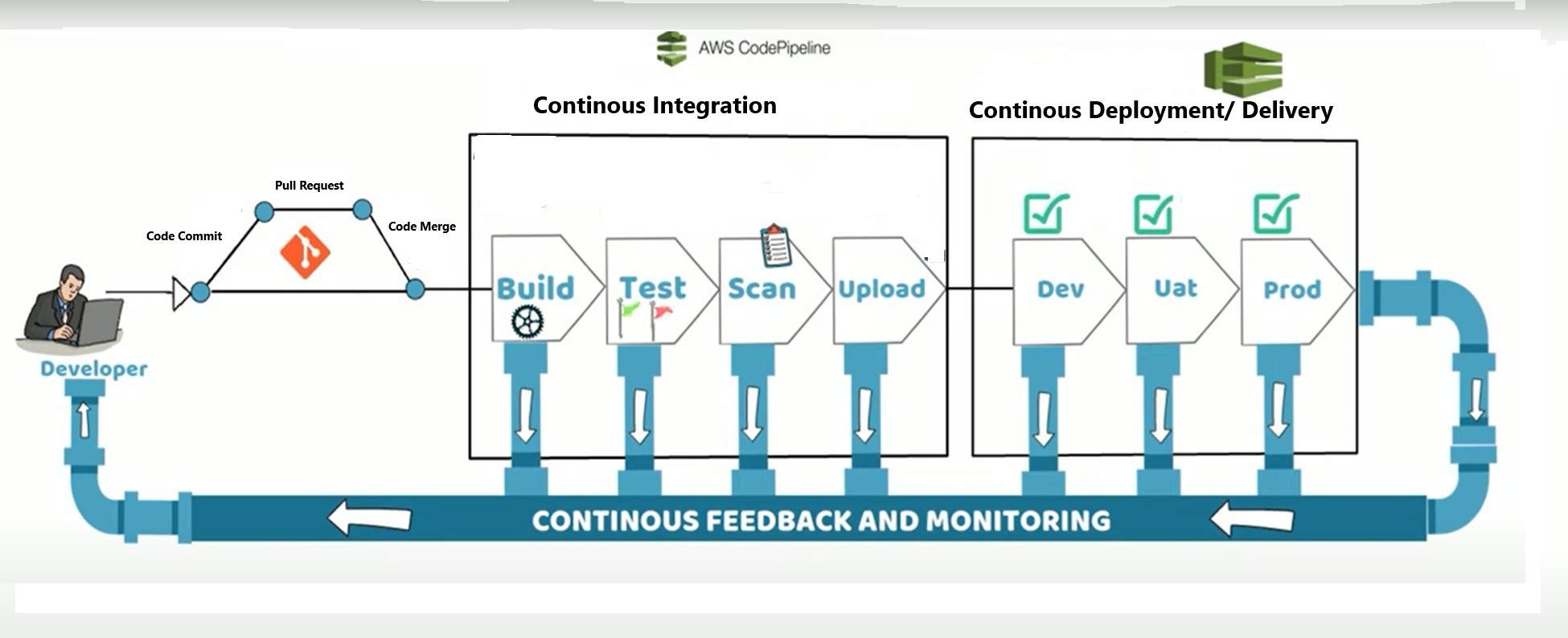
AWS CodePipeline was utilized to automate build and testing processes. This is a continuous integration and continuous delivery service for fast and reliable application and infrastructure updates, which automates the build, test, and deployment phases every time there is a code change.

Automated Testing

Unit tests, integration tests, and UI tests were automated to reduce manual testing efforts and to identify bugs early in the development cycle.

Monitoring and Feedback Loops

Tools such as AWS CloudWatch were set up to provide real-time monitoring of applications and infrastructure, enabling quick responses to issues post-deployment.

CI/CD Process Flow Diagram

An Example Release Process Using AWS CodePipeline

Success Metrics

Deployment Efficiency
  • Deployment frequency increased from weekly to multiple times per day.
  • Lead time for changes was reduced from several weeks to a few hours.
Quality Improvement
  • The percentage of deployments causing a failure in production was reduced from 20% to under 1%.
  • Over 95% of automated tests pass rate was achieved consistently, indicating higher quality of builds.
Recovery and Rollback
  • Mean time to recovery (MTTR) from a production failure was reduced from 4 hours to 30 minutes.
  • Rollback efficiency decreased MTTR by 30% compared to previous deployment processes.

The implementation of the CI/CD pipeline by Galaxy Office Automation Pvt. Ltd. for Optiserv significantly improved the efficiency and quality of software development processes. The transition not only enabled more frequent and reliable releases but also fostered a culture of continuous improvement within the development teams.

Monitoring-for-ideaforge – RB

Implementation of CloudWatch and CloudTrail for IdeaForge by Galaxy Office Automation Pvt Ltd

Galaxy Office Automation Pvt Ltd, a leading IT solutions provider known for delivering cutting-edge technology solutions, embarked on a pivotal project for IdeaForge .  IdeaForge  is the pioneer and the pre-eminent market leader in the Indian unmanned aircraft systems (“UAS”) market. We had the largest operational deployment of indigenous UAVs across India The objective was to implement AWS CloudWatch for monitoring and AWS CloudTrail for logging to improve system performance, security, and operational efficiency of webapplication and servers of IdeaForge  Pvt Ltd.

About the Customer

Client: IdeaForge  Pvt Ltd.

Industry: Designs and manufactures drones for mapping, security, and surveillance applications.

AWS Services Used: AWS CloudWatch, AWS CloudTrail, AWS Lambda, AWS SNS, AWS EventBridge

Challenges: IdeaForge  Pvt Ltd. Designs drones and surveillance that requires real-time monitoring and comprehensive logging to ensure high availability, security, and performance.

awd

About the Customer

Client: ideaForge

Industry: Designing and manufacturing drones for mapping, security, and surveillance applications

AWS Services Used: AWS CloudWatch, AWS CloudTrail, AWS Lambda, AWS SNS, AWS EventBridge

Challenges: ideaForge required real-time monitoring and comprehensive logging to ensure high availability, security, and performance


01_Handshake

Objectives

The previous infrastructure lacks comprehensive monitoring and logging capabilities, resulting in difficulties in tracking application performance, identifying security issues, and maintaining compliance, delayed Incident Response, Manual Monitoring, Limited Insight into Changes, Difficulty Diagnosing Performance Issues.

Enhance Monitoring

Implement AWS CloudWatch to provide real-time monitoring of the infrastructure and applications.

Improve Logging

Implement AWS CloudTrail to log all API activities and track user actions for security and compliance.

Optimize Performance

Use the insights from monitoring and logging to optimize the performance of the infrastructure and applications.

Ensure Security

Enhance the security posture by tracking and analysing access and activity logs.

Facilitate Troubleshooting

Enable faster and more efficient troubleshooting by providing detailed logs and metrics.

Objectives

The previous infrastructure lacked comprehensive monitoring and logging capabilities, resulting in difficulties in tracking application performance, identifying security issues, and maintaining compliance. This led to delayed incident response, manual monitoring, limited insight into changes, and difficulty diagnosing performance issues.

Enhance Monitoring

Implement AWS CloudWatch to provide real-time monitoring of the infrastructure and applications.

Improve Logging

Implement AWS CloudTrail to log all API activities and track user actions for security and compliance.

Optimize Performance

Use the insights from monitoring and logging to optimize the performance of the infrastructure and applications.

Ensure Security

Enhance the security posture by tracking and analysing access and activity logs.

Facilitate Troubleshooting

Enable faster and more efficient troubleshooting by providing detailed logs and metrics.

Our Solution

AWS CloudWatch Implementation

Real-time Monitoring

  • We have set up CloudWatch dashboards to visualize system performance metrics.
  • Configured CloudWatch Alarms to notify the operations team of any anomalies or threshold breaches.

Custom Metrics

  • We have created custom CloudWatch metrics for specific application parameters.
  • Integrated CloudWatch with existing applications to push custom logs and metrics.

Logs and Metrics Analysis

  • We have utilized CloudWatch Logs to aggregate, monitor, and store log files from various sources.
  • We implemented CloudWatch Log Insights for querying and analysing log data.


Customer Example

CloudWatch Alarms for IdeaForge


To enhance infrastructure monitoring and ensure proactive management of the IdeaForge  account, we have implemented a comprehensive set of  AWS CloudWatch alarms. These alarms are designed to alert the team to critical changes in various metrics, helping to maintain optimal performance and quickly address any issues.

Instance Health and Performance

CPU Utilization

Alarms were configured with thresholds at different levels for various servers: one alarm was set to trigger at greater than 90%, another at greater than 80%, and a third at 50%. This tiered approach allows for proactive management of server load and helps prevent potential performance degradation.

Memory utilization

Alarms were established with thresholds at greater than 90% and greater than 80%. These alarms enable timely identification and resolution of memory-related issues, ensuring smooth operation of applications and services.

Disk Space Utilization

Root disk utilization alarms were set with thresholds at greater than 90% and greater than 80%. This ensures that disk usage is kept in check, preventing storage-related disruptions.

Web Services Health

Additionally, alarms for HTTP errors were configured to monitor the health of web services. An alarm was set for 4XX errors with a threshold of 50 errors, and another for 5XX errors with a threshold of 10 errors. These alarms help quickly identify and address client-side and server-side issues, respectively.

Metrics Monitoring Using AWS CloudWatch Agent

  • Galaxy has utilized the AWS CloudWatch Agent to gather custom system-level metrics, including memory utilization, disk I/O, and network statistics from the instance in IdeaForge account.
  • The agent continuously collects metrics from the system or application, sending these metrics to AWS CloudWatch at specified intervals (10 seconds).
  • Galaxy Office Automation used the AWS CloudWatch Agent wizard to generate the configuration file.
  • In IdeaForge account, Galaxy Office Automation has set up log groups to capture access logs and error logs.
  • Galaxy can gain detailed insights into system behaviour, user access patterns, and application performance. This helps in identifying potential issues and optimizing system performance.
  • Error logs provide critical information on system failures or application errors, enabling faster diagnosis and resolution of issues. This minimizes downtime and ensures smoother operations.

Metrics Monitoring Using AWS CloudWatch Agent

  • Galaxy utilized the AWS CloudWatch Agent to gather custom system-level metrics, including memory utilization, disk I/O, and network statistics from the instance in the ideaForge account.
  • The agent continuously collects metrics from the system or application, sending these metrics to AWS CloudWatch at specified intervals (10 seconds).
  • Galaxy used the AWS CloudWatch Agent wizard to generate the configuration file.
  • In the ideaForge account, Galaxy has set up log groups to capture access logs and error logs.
  • Galaxy can gain detailed insights into system behavior, user access patterns, and application performance. This helps in identifying potential issues and optimizing system performance.
  • Error logs provide critical information on system failures or application errors, enabling faster diagnosis and resolution of issues. This minimizes downtime and ensures smoother operations.


AWS CloudTrail Implementation

API Activity Logging

  • Enabled CloudTrail across all AWS accounts to log API calls: We implemented CloudTrail across all AWS accounts to comprehensively record all API activity.
  • We have configured CloudTrail to capture details about API requests: CloudTrail is configured to capture granular details about API requests, including the source IP address, timestamp, and request parameters.
  •  

Security and Compliance

  • We have set up CloudTrail logs to monitor for security threats and compliance breaches: CloudTrail logs are continuously monitored to detect potential security threats and ensure compliance with relevant regulations.
  • We integrated CloudTrail with AWS Config to track resource configurations and changes: CloudTrail is integrated with AWS Config to provide a comprehensive view of resource configurations and track any changes made.
  •  

Centralized Logging

  • We have aggregated CloudTrail logs in a centralized S3 bucket for easy access and long-term storage: CloudTrail logs are aggregated within a centralized S3 bucket for efficient access and long-term archival purposes.
  • Enabled log file validation to ensure the integrity and authenticity of log files: Log file validation is enabled to guarantee the integrity and authenticity of CloudTrail logs.
  •  

Analysis and Alerting

  • We have used AWS Lambda to process CloudTrail logs and trigger alerts based on specific events: AWS Lambda functions are utilized to process CloudTrail logs and trigger automated alerts based on predefined security events.
  • We have integrated CloudTrail with AWS SNS to notify the security team of any suspicious activities: CloudTrail is integrated with AWS SNS to deliver real-time notifications to the security team regarding any suspicious activities identified in the logs.
  •  

AWS CloudTrail Implementation

API Activity Logging

  • We implemented CloudTrail across all AWS accounts to comprehensively record all API activity.
  • CloudTrail is configured to capture granular details about API requests, including the source IP address, timestamp, and request parameters.

Security and Compliance

  • CloudTrail logs are continuously monitored to detect potential security threats and ensure compliance with relevant regulations.
  • CloudTrail is integrated with AWS Config to provide a comprehensive view of resource configurations and track any changes made.

Centralized Logging

  • CloudTrail logs are aggregated within a centralized S3 bucket for efficient access and long-term archival purposes.
  • Log file validation is enabled to guarantee the integrity and authenticity of CloudTrail logs.

Analysis and Alerting

  • AWS Lambda functions are utilized to process CloudTrail logs and trigger automated alerts based on predefined security events.
  • CloudTrail is integrated with AWS SNS to deliver real-time notifications to the security team regarding any suspicious activities identified in the logs.

Customer Example: IdeaForge Pvt Ltd

EC2 Instance State Change Notification Automation using AWS CloudTrail API

 We have implemented a sophisticated automation solution using Amazon EventBridge, AWS Lambda, and Amazon SNS. This setup ensures that any changes in the state of EC2 instances such as starting, stopping, or terminating—are promptly communicated to the relevant stakeholders via email.

EventBridge Configuration

  • We have set up Amazon EventBridge (formerly known as CloudWatch Events) to monitor API calls made to AWS CloudTrail. This enables us to capture detailed events related to EC2 instance state changes.
  • Specifically, EventBridge rules are configured to listen for EC2 state transition events, such as when an instance is started, stopped, or terminated.
  •  

AWS CloudTrail Integration

  • AWS CloudTrail captures API activity across the AWS environment, including actions related to EC2 instances. CloudTrail logs are used as the event source for EventBridge, providing detailed context about the state changes.

Lambda Function

  • When EventBridge detects an EC2 state change event, it triggers an AWS Lambda function. This Lambda function processes the event data, extracting key details such as the instance ID, previous state, and new state.
  • The function then formats this information into a structured message suitable for notification.

Amazon SNS Notification

  • The Lambda function publishes the formatted message to an Amazon SNS topic.

 SNS is used to send notifications via email to a predefined list of recipients.

AWS CloudTrail Process Flow Diagram

Customer Example

EC2 Instance State Change Notification Automation using AWS CloudTrail API

 We have implemented a sophisticated automation solution using Amazon EventBridge, AWS Lambda, and Amazon SNS. This setup ensures that any changes in the state of EC2 instances such as starting, stopping, or terminating—are promptly communicated to the relevant stakeholders via email.

EventBridge Configuration

  • We have set up Amazon EventBridge (formerly known as CloudWatch Events) to monitor API calls made to AWS CloudTrail. This enables us to capture detailed events related to EC2 instance state changes.
  • Specifically, EventBridge rules are configured to listen for EC2 state transition events, such as when an instance is started, stopped, or terminated.

AWS CloudTrail Integration

  • AWS CloudTrail captures API activity across the AWS environment, including actions related to EC2 instances. CloudTrail logs are used as the event source for EventBridge, providing detailed context about the state changes.

Lambda Function

  • When EventBridge detects an EC2 state change event, it triggers an AWS Lambda function. This Lambda function processes the event data, extracting key details such as the instance ID, previous state, and new state.
  • The function then formats this information into a structured message suitable for notification.

Amazon SNS Notification

  • The Lambda function publishes the formatted message to an Amazon SNS topic.
  • SNS is used to send notifications via email to a predefined list of recipients.

AWS CloudTrail Process Flow Diagram

Success Metrics

Performance Optimization

  • Reduced Downtime: Real-time monitoring and alerts reduced system downtime by 40%.
  • Improved Performance: Insights from custom metrics and logs helped in optimizing application performance, resulting in a 30% improvement in response times.

Enhanced Security

  • Improved Threat Detection: Continuous monitoring of API activities and access logs improved threat detection and response time.
  • Compliance: Ensured compliance with industry standards by maintaining detailed logs of all activities.

Operational Efficiency

  • Faster Troubleshooting: Detailed logs and real-time monitoring facilitated faster identification and resolution of issues, reducing troubleshooting time by 50%.
  • Scalability: The scalable nature of CloudWatch and CloudTrail allowed IN10 Media BCCI to handle increased traffic and expand its infrastructure seamlessly.
  • Reduction in Manual Monitoring Effort: Manual monitoring efforts have been reduced by 75%, as automated notifications provide immediate awareness of EC2 state changes.
    Increased Notification Accuracy:
  • Number of EC2 State Change Events Captured: 100% of EC2 state change events (start, stop, terminate) are accurately captured by EventBridge.

Success Metrics

Performance Optimization

  • 40% reduction in system downtime was achieved through real-time monitoring and alerts.
  • 30% improvement in response times resulted from insights gained through custom metrics and logs, which were used to optimize application performance.

Enhanced Security

  • Improved threat detection and response time were achieved through continuous monitoring of API activities and access logs.
  • Compliance with industry standards is ensured by maintaining detailed logs of all activities.

Operational Efficiency

  • 50% reduction in troubleshooting time was achieved through detailed logs and real-time monitoring, facilitating faster identification and resolution of issues.
  • The scalable nature of CloudWatch and CloudTrail allowed IN10 Media BCCI to handle increased traffic and expand its infrastructure seamlessly.
  • 75% of manual monitoring efforts have been reduced, as automated notifications provide immediate awareness of EC2 state changes.
  • 100% of EC2 state change events (start, stop, terminate) are accurately captured by EventBridge.

Conclusion

The implementation of AWS CloudWatch and CloudTrail by Galaxy Office Automation for IdeaForge has greatly improved system monitoring, security, and operational efficiency. Real-time metrics, custom logs, and automated alerts now ensure high availability and optimal performance for IdeaForge’s drone systems. Enhanced threat detection and compliance, coupled with reduced downtime and faster troubleshooting, showcase the effectiveness of these AWS solutions in maintaining robust IT infrastructures. This project highlights the value of comprehensive monitoring and logging in achieving superior system performance and security.

Conclusion

The implementation of AWS CloudWatch and CloudTrail by Galaxy for ideaForge has greatly improved system monitoring, security, and operational efficiency. Real-time metrics, custom logs, and automated alerts now ensure high availability and optimal performance for ideaForge’s drone systems. Enhanced threat detection and compliance, coupled with reduced downtime and faster troubleshooting, showcase the effectiveness of these AWS solutions in maintaining robust IT infrastructures. This project highlights the value of comprehensive monitoring and logging in achieving superior system performance and security.

To know more about the solution


Contact Us

Monitoring-for-ideaforge

About the Customer

Client: ideaForge

Industry: Designing and manufacturing drones for mapping, security, and surveillance applications

AWS Services Used: AWS CloudWatch, AWS CloudTrail, AWS Lambda, AWS SNS, AWS EventBridge

01_Handshake

Objectives

The previous infrastructure lacked comprehensive monitoring and logging capabilities, resulting in difficulties in tracking application performance, identifying security issues, and maintaining compliance. This led to delayed incident response, manual monitoring, limited insight into changes, and difficulty diagnosing performance issues. To overcome these obstacles we prioritized the following objectives:

Enhance Monitoring

Implement AWS CloudWatch to provide real-time monitoring of the infrastructure and applications.

Improve Logging

Implement AWS CloudTrail to log all API activities and track user actions for security and compliance.

Optimize Performance

Use the insights from monitoring and logging to optimize the performance of the infrastructure and applications.

Ensure Security

Enhance the security posture by tracking and analysing access and activity logs.

Facilitate Troubleshooting

Enable faster and more efficient troubleshooting by providing detailed logs and metrics.

Our Solution

AWS CloudWatch Implementation

Real-time Monitoring
  • We have set up CloudWatch dashboards to visualize system performance metrics.
  • Configured CloudWatch Alarms to notify the operations team of any anomalies or threshold breaches.
Custom Metrics
  • We have created custom CloudWatch metrics for specific application parameters.
  • Integrated CloudWatch with existing applications to push custom logs and metrics.
Logs and Metrics Analysis
  • We have utilized CloudWatch Logs to aggregate, monitor, and store log files from various sources.
  • We implemented CloudWatch Log Insights for querying and analysing log data.

Instance Health and Performance

CPU Utilization

Alarms were configured with thresholds at different levels for various servers: one alarm was set to trigger at greater than 90%, another at greater than 80%, and a third at 50%. This tiered approach allows for proactive management of server load and helps prevent potential performance degradation.

Memory utilization

Alarms were established with thresholds at greater than 90% and greater than 80%. These alarms enable timely identification and resolution of memory-related issues, ensuring smooth operation of applications and services.

Disk Space Utilization

Root disk utilization alarms were set with thresholds at greater than 90% and greater than 80%. This ensures that disk usage is kept in check, preventing storage-related disruptions.

Web Services Health

Additionally, alarms for HTTP errors were configured to monitor the health of web services. An alarm was set for 4XX errors with a threshold of 50 errors, and another for 5XX errors with a threshold of 10 errors. These alarms help quickly identify and address client-side and server-side issues, respectively.

Metrics Monitoring Using AWS CloudWatch Agent

  • Galaxy utilized the AWS CloudWatch Agent to gather custom system-level metrics, including memory utilization, disk I/O, and network statistics from the instance in the ideaForge account.
  • The agent continuously collects metrics from the system or application, sending these metrics to AWS CloudWatch at specified intervals (10 seconds).
  • Galaxy used the AWS CloudWatch Agent wizard to generate the configuration file.
  • In the ideaForge account, Galaxy has set up log groups to capture access logs and error logs.
  • Galaxy can gain detailed insights into system behavior, user access patterns, and application performance. This helps in identifying potential issues and optimizing system performance.
  • Error logs provide critical information on system failures or application errors, enabling faster diagnosis and resolution of issues. This minimizes downtime and ensures smoother operations.


AWS CloudTrail Implementation

API Activity Logging
  • We implemented CloudTrail across all AWS accounts to comprehensively record all API activity.
  • CloudTrail is configured to capture granular details about API requests, including the source IP address, timestamp, and request parameters.
Security and Compliance
  • CloudTrail logs are continuously monitored to detect potential security threats and ensure compliance with relevant regulations.
  • CloudTrail is integrated with AWS Config to provide a comprehensive view of resource configurations and track any changes made.
Centralized Logging
  • CloudTrail logs are aggregated within a centralized S3 bucket for efficient access and long-term archival purposes.
  • Log file validation is enabled to guarantee the integrity and authenticity of CloudTrail logs.
Analysis and Alerting
  • AWS Lambda functions are utilized to process CloudTrail logs and trigger automated alerts based on predefined security events.
  • CloudTrail is integrated with AWS SNS to deliver real-time notifications to the security team regarding any suspicious activities identified in the logs.

Customer Example

EC2 Instance State Change Notification Automation using AWS CloudTrail API

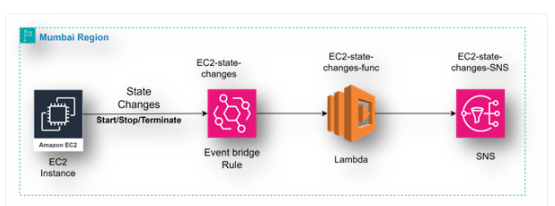
 We have implemented a sophisticated automation solution using Amazon EventBridge, AWS Lambda, and Amazon SNS. This setup ensures that any changes in the state of EC2 instances such as starting, stopping, or terminating—are promptly communicated to the relevant stakeholders via email.

EventBridge Configuration
  • We have set up Amazon EventBridge (formerly known as CloudWatch Events) to monitor API calls made to AWS CloudTrail. This enables us to capture detailed events related to EC2 instance state changes.
  • Specifically, EventBridge rules are configured to listen for EC2 state transition events, such as when an instance is started, stopped, or terminated.
AWS CloudTrail Integration
  • AWS CloudTrail captures API activity across the AWS environment, including actions related to EC2 instances. CloudTrail logs are used as the event source for EventBridge, providing detailed context about the state changes.
Lambda Function
  • When EventBridge detects an EC2 state change event, it triggers an AWS Lambda function. This Lambda function processes the event data, extracting key details such as the instance ID, previous state, and new state.
  • The function then formats this information into a structured message suitable for notification.
Amazon SNS Notification
  • The Lambda function publishes the formatted message to an Amazon SNS topic.
  • SNS is used to send notifications via email to a predefined list of recipients.
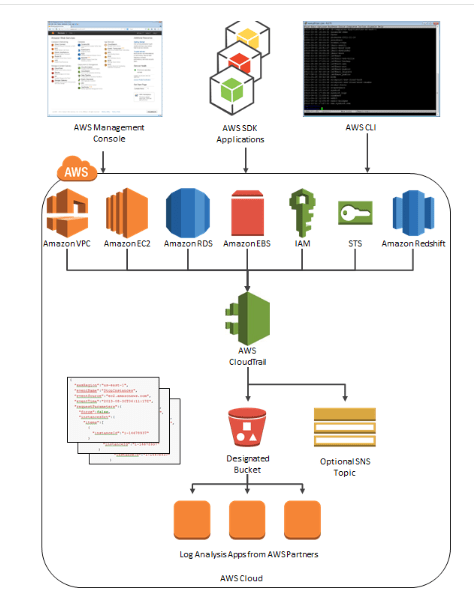
AWS CloudTrail Process Flow Diagram
Success Metrics

Performance Optimization
  • 40% reduction in system downtime was achieved through real-time monitoring and alerts.
  • 30% improvement in response times resulted from insights gained through custom metrics and logs, which were used to optimize application performance.
Enhanced Security
  • Improved threat detection and response time were achieved through continuous monitoring of API activities and access logs.
  • Compliance with industry standards is ensured by maintaining detailed logs of all activities.
Operational Efficiency
  • 50% reduction in troubleshooting time was achieved through detailed logs and real-time monitoring, facilitating faster identification and resolution of issues.
  • The scalable nature of CloudWatch and CloudTrail allowed IN10 Media BCCI to handle increased traffic and expand its infrastructure seamlessly.
  • 75% of manual monitoring efforts have been reduced, as automated notifications provide immediate awareness of EC2 state changes.
  • 100% of EC2 state change events (start, stop, terminate) are accurately captured by EventBridge.

The implementation of AWS CloudWatch and CloudTrail by Galaxy for ideaForge has greatly improved system monitoring, security, and operational efficiency. Real-time metrics, custom logs, and automated alerts now ensure high availability and optimal performance for ideaForge’s drone systems. Enhanced threat detection and compliance, coupled with reduced downtime and faster troubleshooting, showcase the effectiveness of these AWS solutions in maintaining robust IT infrastructures. This project highlights the value of comprehensive monitoring and logging in achieving superior system performance and security.

To know more about the solution

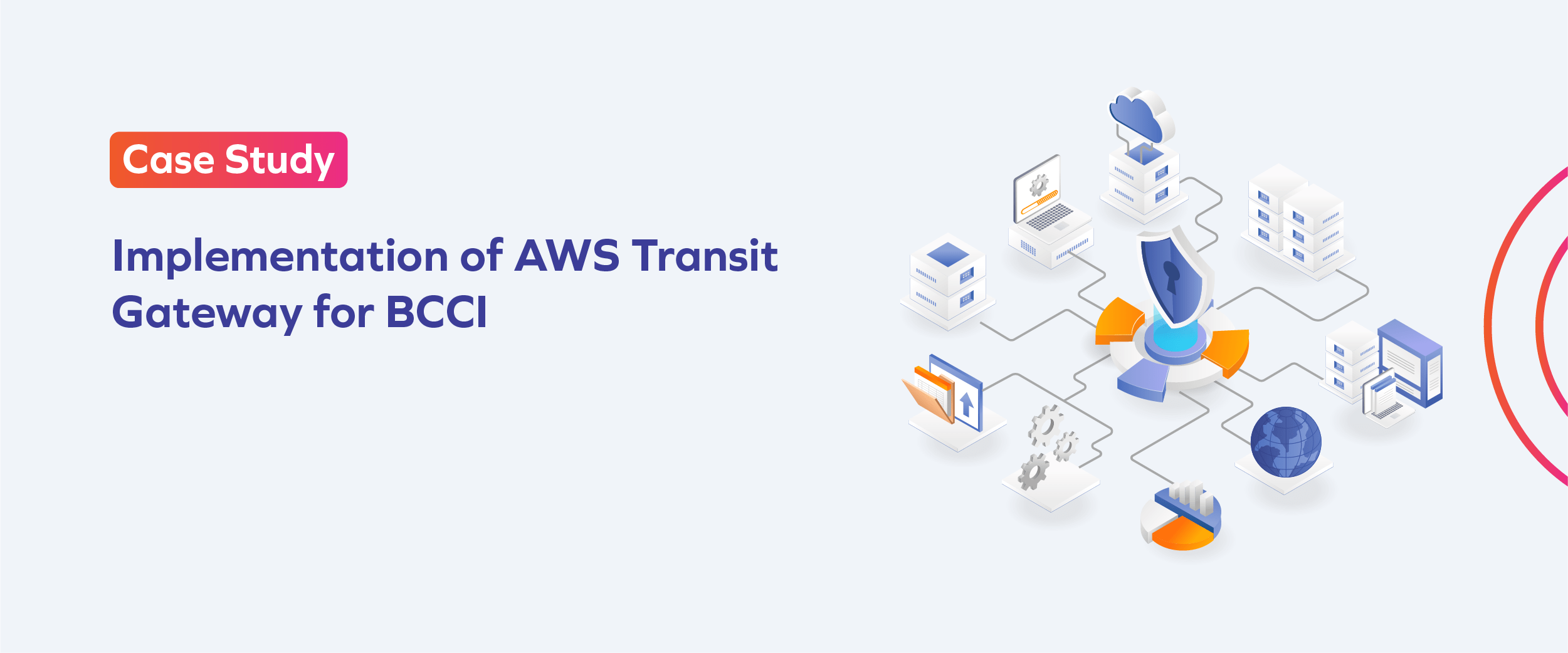
Implementation of AWS Transit Gateway for BCCI

About the Customer

IN10 Media Pvt Ltd-BCCI

The Board of Control for Cricket in India (BCCI) is the governing body for cricket in India and one of the most influential cricket organizations globally. BCCI oversees all cricket activities in India, including domestic competitions, the Indian Premier League (IPL), and international matches. BCCI also manages a vast array of digital platforms and applications to deliver cricket-related content and services to millions of fans worldwide.

awd

Customer Challenge

BCCI faced several significant challenges in optimizing their IT infrastructure to support their extensive digital ecosystem:

Complex Network Management
  • Multiple VPCs: BCCI had multiple Virtual Private Clouds (VPCs) across various regions, to manage different applications and services.
  • Multi-Region Connectivity: Ensuring seamless and efficient connectivity between VPCs in different AWS regions was critical for maintaining application performance and reliability.
  • VPC peering Overhead Management: As the number of VPCs increased, the overhead to manage multiple VPC peering connections also increased, complicating the network management.
  • On-Premises Integration: Integrating on-premises data centers with AWS VPCs posed a challenge in maintaining a unified network architecture.
Scalability and Performance
  • High Traffic Volumes: During major cricket events like IPL, BCCI’s platforms experienced significant traffic spikes that required scalable infrastructure to handle the load efficiently.
  • Latency Reduction: Ensuring low latency and high performance for superior user experience was critical.
Reliability and High Availability
  • Uptime: Ensuring continuous uptime and minimizing downtime during peak traffic periods were essential for maintaining user engagement.
  • Failover Capabilities: Implementing robust failover mechanisms to ensure service continuity during infrastructure failures.
Efficient Resource Utilization
  • Cost Management: Optimizing the use of resources to manage costs effectively while maintaining high performance.

Our Solution

To address the challenges BCCI faced with complex network management, scalability, performance, reliability, and cost efficiency, Galaxy implemented a comprehensive solution utilizing AWS infrastructure. We deployed AWS Transit Gateway, Elastic Load Balancer (ELB), Auto-Scaling and EC2 instances to enhance the overall reliability and performance of their digital platforms. Additionally, we incorporated a Site-to-Site VPN to ensure secure and seamless connectivity between on-premises data centers and AWS VPCs.

Deployment of the AWS Transit Gateway

The AWS Transit Gateway was strategically implemented to centralize and simplify the management of multiple VPCs and on-premises data centers. This provided a unified network architecture, enabling seamless communication between different environments. The Transit Gateway was configured to manage routing policies and provide a single point of control for all network traffic. This approach not only improved the responsiveness of applications but also provided high availability by ensuring efficient and reliable connectivity between various network segments. By leveraging the AWS Transit Gateway, the infrastructure could dynamically scale to accommodate varying traffic loads, maintaining optimal performance during peak times and reducing costs during quieter periods.

Primary AWS Services Used

AWS Transit Gateway

Implemented to connect multiple VPCs and on-premises data centers, providing a centralized hub for network traffic. The Transit Gateway simplified network management by allowing seamless communication between different environments. It enabled efficient routing policies and reduced the complexity of managing inter-VPC and on-premises connectivity.

Elastic Load Balancing (ELB)

We deployed an Application Load Balancer (ALB) to handle HTTP and HTTPS traffic. The ALB efficiently routed requests based on content and ensured that user traffic was directed to the appropriate instances, enhancing both performance and security. The load balancer provided high availability by automatically distributing traffic across multiple instances and regions.

Amazon EC2 Instances

Multiple EC2 instances were used behind the load balancer to run BCCI’s web applications, APIs, and databases. This setup allowed for seamless scaling and redundancy, ensuring consistent performance even under high demand. Auto-scaling was configured to adjust the number of instances based on traffic load, optimizing resource utilization and cost-efficiency.

Amazon Auto Scaling

Integrated with the load balancer, Auto Scaling adjusted the number of instances based on real-time traffic patterns. This optimized resource utilization and ensured cost-efficiency by scaling resources up or down according to demand.

Site-to-Site VPN

Implemented to establish secure and reliable connectivity between BCCI’s on-premises data centers and AWS VPCs. This provided an encrypted connection for data transfer, ensuring secure communication and integration of on-premises resources with AWS cloud infrastructure.

AWS Client VPN

Deployed to provide secure remote access to BCCI’s applications and resources hosted on AWS. This enabled BCCI employees to connect securely from remote locations, ensuring flexibility and continuity of operations.

Scalability

The solution provided a scalable framework to accommodate ideaForge’s growing network and data transfer needs as their operations expanded.

This comprehensive solution provided BCCI with a scalable, reliable, and cost-efficient infrastructure, enabling them to manage their extensive digital ecosystem effectively. The use of AWS Transit Gateway, Elastic Load Balancer, EC2 instances, and Site-to-Site VPN ensured that BCCI could deliver high-quality, uninterrupted services to their global audience.

Results and Benefits

The implementation of these AWS services resulted in significant improvements and quantifiable outcomes for BCCI:

Simplified Network Management
  • Centralized Control: The AWS Transit Gateway reduced network complexity significantly by providing centralized control over VPCs and on-premises connections.
  • Efficient Routing: Simplified routing policies improved network management efficiency.
Enhanced Scalability and Performance:
  • Traffic Handling: The infrastructure is scaled seamlessly to handle a 200% increase in traffic during major cricket events, ensuring a smooth and responsive user experience.
  • Latency Reduction: Reduced latency which resulted in faster load times and improved user satisfaction.
  •  
Improved Reliability
  • High Uptime: Maintained 99% uptime, minimizing service disruptions and ensuring continuous access to applications.
  • Robust Failover: Implemented robust failover mechanisms that ensured service continuity during infrastructure failures.
  •  
Cost Efficiency

Cost Management: Effective cost management strategies ensured that BCCI could scale their infrastructure without incurring excessive expenses.

About Galaxy Office Automation Private Limited

With 36 years of experience in driving digital transformation, Galaxy Office Automation Pvt. Ltd is a trusted technology solutions provider that delivers innovative, cutting-edge solutions integrating advanced technologies. Our team of over 245 professionals is committed to continuous improvement, holding a range of esteemed AWS certifications that demonstrate our expertise in cloud architecture, DevOps, and storage solutions. We have further solidified our expertise by achieving the AWS Storage Competency, enabling us to provide tailored solutions for our valued clients in multi-cloud environments. By constantly upgrading our portfolio of solutions and skills, we stay ahead of the curve in the fast-changing digital world, ensuring our clients receive the best possible support.

1700478494045

The implementation of AWS Transit Gateway, Elastic Load Balancer, EC2 instances, and Site-to-Site VPN by Galaxy Office Automation significantly enhanced BCCI’s IT infrastructure. This solution reduced network complexity, increased traffic handling capacity by 200%, and maintained 99.99% uptime. These improvements ensured high-quality, uninterrupted services for BCCI’s global audience, showcasing Galaxy’s expertise in delivering reliable and efficient technology solutions.

To know more about the solution

Implementation of AWS site-to-site VPN using bgp for Ideaforge Technology Ltd

About the Customer

ideaForge is the pioneer and the pre-eminent market leader in the Indian unmanned aircraft systems (UAS) market. ideaForge had the largest operational deployment of indigenous UAVs across India, with an ideaForge manufactured drone taking off every five minutes for surveillance and mapping on an average. ideaForge customers have completed over 5,00,000 flights using UAVs. ideaForge ranked 5th globally in the dual-use category (civil and defense) drone manufacturers as per the report published by Drone Industry Insights in December 2023.

Challenge

ideaForge encountered a critical challenge in ensuring secure and efficient connectivity between their on-premises location or Data Center to AWS cloud infrastructure.

The primary concerns included:

  • Establishing dynamic and robust routing for seamless data transfer.
  • Ensuring high availability and redundancy.
  • Maintaining low latency and high performance for critical application access.
  • Simplifying network management and operational overhead.

These challenges were pivotal as they directly influenced ideaForge’s operational efficiency, data security, and ability to deliver timely UAV data to their clients.

The ideaForge wanted to protect network traffic both inside AWS and between their on-premises location and AWS resources.

As part of achieving the goal, ideaForge began by transforming its infrastructure from a fleet of servers and systems which are on-premises to a hybrid architecture that leverages cloud-based infrastructure as a service.

Our Solution

Galaxy, as a trusted Cloud IT partner, provided a robust solution by implementing an AWS Site-to-Site VPN with BGP (Border Gateway Protocol) routing. This solution facilitated secure, scalable, and dynamic connectivity between ideaForge’s on-premises location or Data Center to AWS infrastructure.

Key components of the solution included:

AWS Site-to-Site VPN with BGP Routing

Establishing a secure IPSec VPN connection and using BGP for dynamic routing between ideaForge’s on-premises network and AWS VPC (Virtual Private Cloud).

High Availability and Redundancy

Configuring redundant VPN tunnels with BGP sessions to ensure failover capabilities and continuous uptime.

Optimized Performance

Utilizing AWS VPN to enhance bandwidth and minimize latency where necessary.

Simplified Management

Leveraging AWS’s management tools to monitor and manage BGP routing and VPN connections, ensuring minimal downtime and efficient network operations.

Robust monitoring

AWS Site-to-Site VPN gives visibility into local and remote network health and monitors the reliability and performance of VPN connections by integrating with Amazon CloudWatch.

Customization

It provides tunnel customization options such as inside tunnel IP address, pre-shared key, and Border Gateway Protocol Autonomous System Number (BGP ASN).

Network Address Translation (NAT) Traversal

It supports NAT Traversal applications, allowing you to use private IP addresses behind routers on private networks with a single public IP address facing the internet.

Results and Benefits

The implementation of the AWS Site-to-Site VPN with BGP routing resulted in several significant benefits for ideaForge:

Enhanced Security

The encrypted VPN connection ensured that all data transfers between on-premises and AWS Infrastructure were secure.


Dynamic Routing

BGP routing enabled automatic route updates and failover, ensuring continuous and reliable connectivity even during network changes or disruptions.

Improved Performance

Optimized network performance leading to faster data transfers and significantly improved application performance.

High Availability & Redundancy

Implemented redundancy to avoid single points of failure, with multiple VPN connections and careful failover configurations using BGP dynamic routing.

Increased Reliability

The high availability configuration with redundant VPN tunnels and BGP sessions ensured continuous network uptime which is 99% and reliability.

Operational Efficiency

Simplified network management with a centralized and automated routing solution, reducing administrative overhead by 50%, allowing them to focus on core business activities.

  • Scenario:

Before Implementation: Administrators perform network checks and updates twice a week, taking 2 hours each session.

Total time per week: 2 sessions * 2 hours = 4 hours

  • After Implementation:

With the new solution, administrators only need to perform these tasks once a week.

Total time per week: 1 session * 2 hours = 2 hours

  • Calculation:

Weekly Time Savings: 4 hours – 2 hours = 2 hours saved per week

Annual Time Savings: 2 hours/week * 52 weeks = 104 hours saved per year

Scalability

The solution provided a scalable framework to accommodate ideaForge’s growing network and data transfer needs as their operations expanded.

About Galaxy Office Automation Private Limited

With 36 years of experience in driving digital transformation, Galaxy Office Automation Pvt. Ltd is a trusted technology solutions provider that delivers innovative, cutting-edge solutions integrating advanced technologies. Our team of over 245 professionals is committed to continuous improvement, holding a range of esteemed AWS certifications that demonstrate our expertise in cloud architecture, DevOps, and storage solutions. We have further solidified our expertise by achieving the AWS Storage Competency, enabling us to provide tailored solutions for our valued clients in multi-cloud environments. By constantly upgrading our portfolio of solutions and skills, we stay ahead of the curve in the fast-changing digital world, ensuring our clients receive the best possible support.

1700478494045

The implementation of the AWS Site-to-Site VPN with BGP routing has been a game-changer for ideaForge. By addressing their security, reliability, performance, and scalability challenges, Galaxy successfully provided a solution that significantly enhanced ideaForge’s network infrastructure. The result was a 50% reduction in administrative overhead. These improvements have enabled ideaForge to achieve faster data transfers, improved application performance, and seamless scalability, positioning them for continued growth and success in their industry.


To know more about the solution